
Refrigerated trucks, often called ‘reefers’, are essential to the Australia’s transport and logistics network. They play a critical role in moving temperature-sensitive goods across long distances while maintaining product quality and safety. From food and medicine to chemicals and flowers, these vehicles ensure that perishable or fragile items reach their destination in perfect condition.
But how exactly do refrigerated trucks work? And which industries rely on them most?
How Refrigerated Trucks Work
A refrigerated truck operates much like a mobile cold room. It is equipped with a specialised refrigeration unit designed to regulate the temperature of the cargo space. These systems can maintain conditions ranging from below freezing to controlled ambient temperatures, depending on the type of goods being transported.
The basic components of a refrigerated truck include:
Refrigeration unit
This is the heart of the system. It uses a compressor, condenser, and evaporator to remove heat from the cargo area.

Insulated trailer
The walls, floor, and ceiling of the truck are insulated to prevent external heat from entering and to keep the temperature consistent.
Temperature monitoring systems
Sensors and digital controls allow drivers to track and adjust the internal temperature in real time.
Power source
Most refrigerated trucks run their cooling systems using either the vehicle’s engine or an independent diesel-powered unit, ensuring constant temperature control even when parked.
The correct maintenance and calibration are essential to ensure these systems work efficiently, especially during long-haul journeys where temperature variations could affect product safety.
Why Refrigerated Transport Is Essential
The Australian climate can be unpredictable, with high temperatures and long distances between major cities. For businesses that rely on freshness or stability, refrigerated transport is not a luxury but a necessity.
Temperature control prevents spoilage, extends shelf life, and protects products from contamination. It also ensures compliance with strict Australian health and safety standards, which require that perishable goods remain within specific temperature ranges throughout their journey.
Without refrigerated transport, entire industries would struggle to operate efficiently, particularly in food production, pharmaceuticals, and agriculture.
Key Industries That Use Refrigerated Trucks
1. Food and Beverage
This is the most common use for refrigerated trucks. They carry everything from meat, seafood, and dairy to frozen meals and fresh produce. Maintaining the correct temperature helps prevent spoilage and ensures food reaches retailers and consumers in peak condition.
2. Pharmaceuticals and Healthcare
Many medicines, vaccines, and medical supplies must be stored at controlled temperatures to remain effective. Refrigerated transport ensures these products stay stable during transit, supporting hospitals, pharmacies, and healthcare providers across the country.
3. Agriculture and Floriculture
Farmers and flower growers rely on refrigerated trucks to deliver fresh goods to markets and export facilities. For delicate products like flowers or freshly harvested fruit, even slight temperature changes can affect quality.
4. Chemicals and Industrial Products
Certain chemicals and materials used in manufacturing must also be transported under specific conditions. Refrigerated systems prevent chemical reactions or degradation caused by exposure to heat.
5. Supermarkets and Retail Chains
Retailers depend on a constant flow of perishable goods from distribution centres to stores. Refrigerated trucks keep products within safe temperature ranges during delivery, reducing waste and ensuring consistent stock availability.
The Role of Skilled Drivers
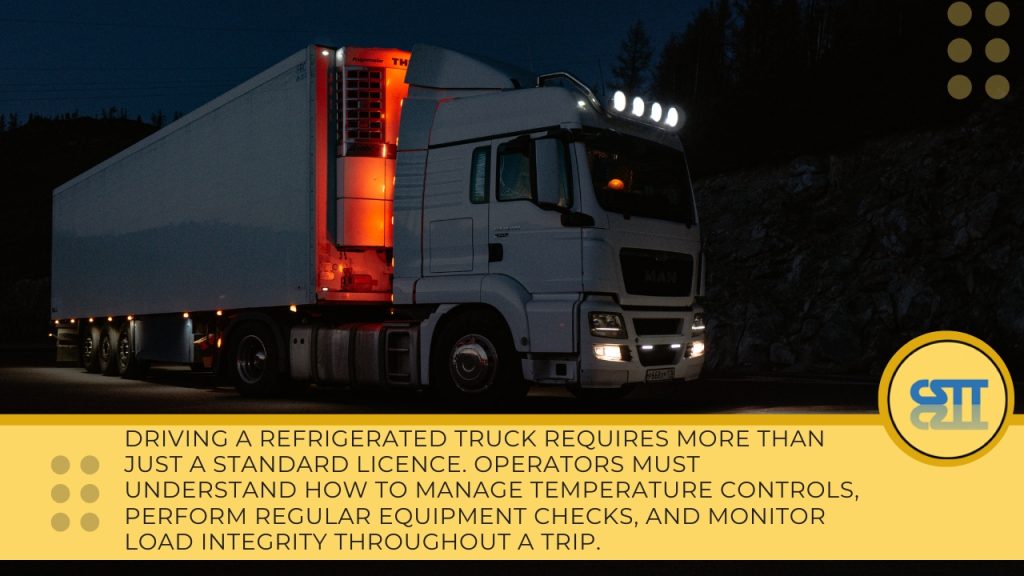
Driving a refrigerated truck requires more than just a standard licence. Operators must understand how to manage temperature controls, perform regular equipment checks, and monitor load integrity throughout a trip.
Many drivers who transport refrigerated goods hold a Heavy Combination (HC) Road Ranger Licence, which qualifies them to operate larger vehicles with complex systems. This licence ensures that drivers are equipped with the technical knowledge and skills to handle long-distance freight safely and efficiently.
Training covers not only vehicle operation but also best practices for maintaining temperature stability, securing loads, and meeting regulatory requirements for dangerous or sensitive goods.
Safety and Compliance
Operating a refrigerated truck involves strict compliance with food safety and transport regulations. Drivers and operators must follow the Chain of Responsibility (CoR) laws, which hold all parties in the supply chain accountable for safety breaches.
Regular temperature logging, proper documentation, and adherence to hygiene standards are all required to maintain compliance. Businesses that invest in driver training and equipment maintenance can avoid costly product losses and penalties.
Building a Career in Refrigerated Transport
Refrigerated transport is one of the most stable and rewarding sectors within Australia’s logistics industry. Skilled drivers are always in demand, particularly those qualified to operate heavy combination vehicles that carry large, temperature-controlled loads.
Obtaining a Heavy Combination (HC) Road Ranger licence through CSTT gives drivers a competitive edge. This advanced training provides the technical expertise required to manage specialised freight and ensures you are prepared for the demands of long-haul transport.
Working in refrigerated freight offers variety, job security, and the satisfaction of contributing to industries that keep the country moving. Whether delivering fresh produce, pharmaceuticals, or critical goods, trained drivers play an essential role in maintaining supply chain reliability across Australia.