
Let’s be honest. Diesel prices aren’t getting any friendlier.
Whether you are an owner-driver watching your profit margin shrink at the bowser, or a fleet manager trying to keep the books in the black, fuel is easily your biggest variable cost.
You can’t control the price per litre. But you can control how much of it you burn.
At CSTT, our driving classes go beyond just helping you pass the test or reversing a B-Double without hitting the kerb. We focus on professional driving habits that save money. Here are the practical ways to keep your fuel consumption down and your bank balance up.
Momentum is Free
Every time you touch the brakes, you are turning diesel into heat and dust. And every time you accelerate a 40-tonne rig back up to speed, you are guzzling fuel.
The best drivers read the traffic hundreds of metres ahead.
See a red light in the distance? Lift off the accelerator now. Let the truck roll. If you time it right, the light turns green before you even must stop, and you can roll through with your momentum intact.
Racing up to a red light just to stomp on the brakes isn’t making good time. It is just burning fuel, and your cash.
The Green Band is There for a Reason
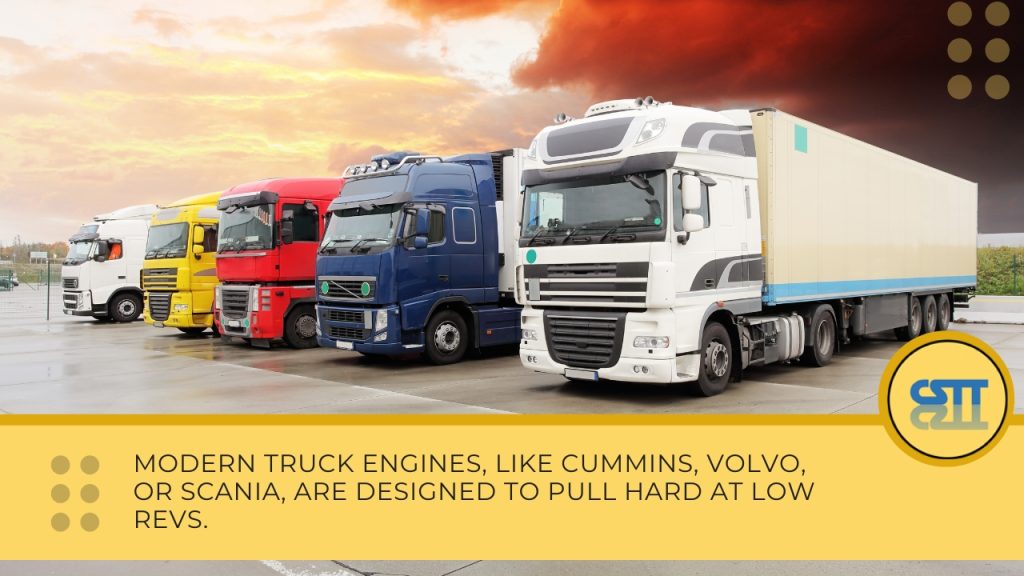
Modern truck engines, like Cummins, Volvo, or Scania, are designed to pull hard at low revs. Most heavy vehicle engines deliver peak torque way down low, usually between 1100 and 1500 RPM. That is your sweet spot.
If you are revving the guts out of it to 1900 or 2000 RPM before changing gears, you are making noise, not speed. You are also burning about 30% more fuel than you need to.
The rule of thumb is simple. Stay in the highest gear possible without lugging the engine. Let the torque do the work, not the horsepower. Also, try to skip gears when you are light or going downhill. You don’t need to hit every single gear in the box.
Aerodynamics Matters
At highway speeds of 90 to 100km/h, half of your fuel is used just to push air out of the way. You can’t change the shape of the truck, but you can change how you set it up.
Check your roof deflectors. If you have a gap between the cab and the trailer, that is a massive wind trap. Adjust the deflector properly.
If you are running a tautliner, make sure those buckles are tight because flapping curtains create drag. For tippers, a loose tarp isn’t just a safety hazard. It acts like a parachute.
Check Your Tyres (Seriously)
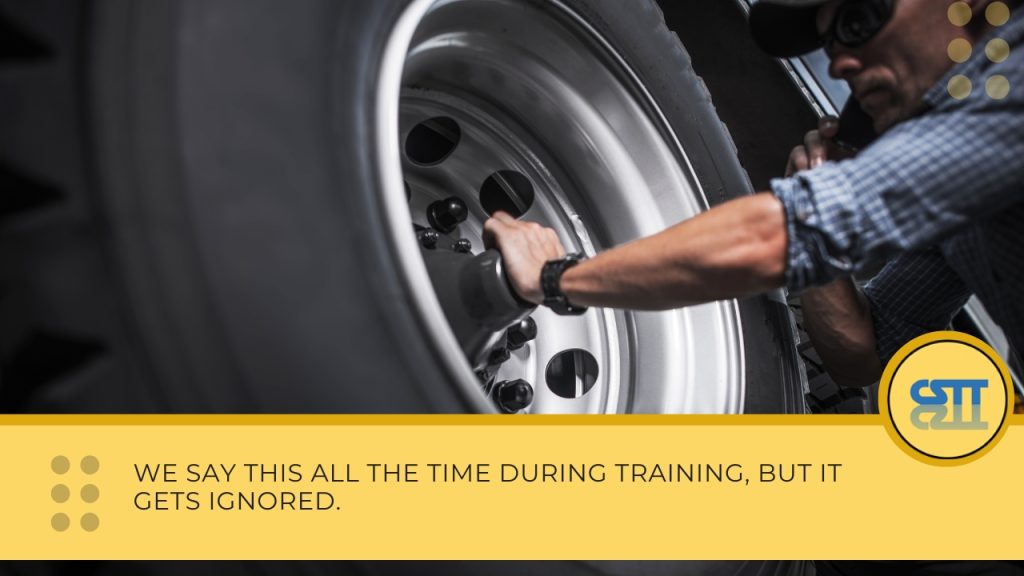
We say this all the time during training, but it gets ignored.
Running on under-inflated tyres is like trying to run through soft sand. It increases rolling resistance.
The data is clear on this. A tyre that is 10% under-inflated increases fuel consumption by about 1%.
That might not sound like much until you do the maths. If you burn $100,000 of fuel a year, that is $1,000 wasted just because you didn’t check pressures.
Check them when they are cold before you leave the depot. Don’t rely on thumping them with a bar. Use a gauge.
The Idle Problem
Old habits die hard. A lot of older drivers leave the truck idling while they grab a pie or run into the office.
Modern engines warm up faster under load while driving gently than they do idling.
Idling burns roughly 2 to 4 litres per hour. It also cools down the combustion chamber, leading to incomplete burns and soot build-up which clogs your DPF.
If you are stopped for more than a few minutes, shut it down. Your turbo needs a cool-down period, sure, but it doesn’t need to run for 20 minutes while you have a shower.
It’s All in the Right Foot
At the end of the day, the biggest fuel saver is the nut behind the wheel.
Aggressive driving, including hard acceleration, tailgating, and speeding, can increase fuel use by up to 30%.
If it’s time to upgrade from HR to HC, or you want to get your MC licence, good habits start with good training. Contact Chris and the team at CSTT. You can get in touch via our contact us page and we will get you sorted.